 Email:vip@taojiyun.com
- ID:17154831823
- VIP:淘集运会员
- User Center Log Out
- My Shopping Cart My Order
-
~ Empty ~
-
~ Empty ~
Email:vip@taojiyun.com
Taojiyun 2026-03-30 17:26:42 512k 0 0 Logistics Information
In 2026, trade exchanges across the Taiwan Strait will continue to heat up, and the customs clearance policies for consolidated shipments from the Chinese mainland to Taiwan will be simultaneously optimized and upgraded.
Combined with the further expansion of the zero-tariff policy under the Economic Cooperation Framework Agreement (ECFA) across the Taiwan Strait, the full implementation of Taiwan's e-Customs 4.0 electronic customs clearance system, and the adaptation and adjustment of shipping ports and customs clearance nodes in various regions, individual consolidated shipping users and cross-border e-commerce enterprises are facing new adjustments and challenges in customs clearance processes and compliance declarations.
Meanwhile, the emergence of professional consolidated shipping service platforms has provided efficient solutions to address the logistics pain points of online shopping across the Taiwan Strait. Among them, Taojiyun has become the first choice for many users with its full-process services and localized adaptation。
This article will systematically interpret the core policies for consolidated shipping and customs clearance from the Chinese mainland to Taiwan in 2026, meticulously break down the practical operation process, regional adaptation techniques, and key points to avoid pitfalls, to assist various entities in efficiently and compliantly completing cross-strait consolidated shipping and customs clearance, and precisely match the core demands of Google search users for policy interpretation and practical operation guidance.
The customs clearance policy for consolidated shipments from the Chinese mainland to Taiwan in 2026 is ; Simplify processes, enhance efficiency, and strengthen compliance. At the core, relying on the upgrade of the electronic customs clearance system, we will further remove the bottlenecks in cross-strait consolidated transportation. At the same time, we will clarify the customs clearance standards for various types of goods and standardize the declaration process to avoid problems such as cargo detention and fines caused by unfamiliarity with the policies.
The core policy orientation includes three points:
First, deepen the coverage of the zero-tariff policy under the Economic Cooperation Framework Agreement (ECFA) and expand the scope of applicable goods.
Second, fully promote the e-Customs 4.0 electronic customs clearance system to realize the full process of declaration, review and release online.
Third, refine the regional adaptation rules, and optimize the timeliness and cost allocation by combining the major shipping ports on the Chinese mainland with the customs clearance nodes in Taiwan.
It is important to note that in 2026, Taiwan's customs clearance policy will impose higher requirements on the authenticity of declarations and the accuracy of goods classification. Differentiated supervision will be implemented for individual and enterprise consolidated shipping, and the customs clearance standards for sensitive and general goods will be further clarified. This is currently the core focus of customs clearance for consolidated shipping from the Chinese mainland to Taiwan and also a frequently searched demand point by Google users.
whileThe compliance experience and localized services of professional consolidated shipping service providers can effectively reduce customs clearance risksBecome an important auxiliary force for the implementation of policies.
The list of prohibited items for customs clearance in Taiwan in 2026 has not undergone major adjustments. The core items include: flammable and explosive items (gasoline, firecrackers, etc.), controlled knives, drugs, prohibited publications, live animals, fresh produce (without special preservation treatment), counterfeit and shoddy products, etc.
It should be noted that common items in personal consolidated shipping, such as power banks and lithium batteries (with a capacity exceeding 100Wh), are also prohibited items and are not allowed to be transported. If declared in violation of regulations, the goods will be detained and fines will be imposed.
In case of abnormal situations such as customs clearance delays or goods detention, the following steps can be followed for handling:
The first step
Query the abnormal reasons (such as incomplete information, incorrect classification of goods, declaration of contraband, etc.) through the e-Customs 4.0 system;
Step Two
Supplement relevant materials and correct the declared information based on the abnormal causes;
Step 3
If it is an illegal declaration, a fine must be paid as required and relevant procedures must be completed.
Step Four
If you have any objections to the customs clearance result, you can submit an appeal to the Taiwan Customs. The process cycle is approximately 3 to 5 working days.
Personal consolidated shipping must meet the requirements of ; Self-use, reasonable quantity; Principle.
You need to provide your ID card, the packing list of goods and the invoice to make the declaration.
Personal consolidated shipping is mainly suitable for self-use goods such as daily necessities, clothing and small household appliances. It is prohibited to use it for commercial purposes. Otherwise, it will be regulated in accordance with the enterprise consolidated shipping standards.
Enterprise consolidated shipping requires the provision of complete compliance documents, including business licenses, import and export qualifications, commercial contracts, packing lists, invoices, certificates of origin, etc. There is no clear limit for goods declaration, but the purpose and value of the goods must be truthfully declared, and taxes and fees must be paid as required (for non-ECFA zero-tariff goods).
Enterprise consolidated shipping is suitable for cross-border e-commerce orders, industrial supplies, and bulk goods. The customs clearance process is more standardized and requires cooperation with customs review.
The core optimization of the 2026 consolidation customs clearance policy from the Chinese mainland to Taiwan is Efficiency improvement, compliance strengthening, regional adaptation; Whether it is an individual or an enterprise user, to successfully complete customs clearance, three core points need to be grasped
First, be familiar with the details of the zero-tariff policy of the Economic Cooperation Framework Agreement (ECFA), enjoy the benefits reasonably and reduce costs. Second, be proficient in operating the e-Customs 4.0 electronic customs clearance system to ensure the authenticity and completeness of the declaration materials;
Third, based on your own shipping needs, select the appropriate mainland shipping port and Taiwan customs clearance node to optimize the timeliness and cost.
Practical suggestions: Individual users should give priority to shipping through the ports of Shenzhen and Xiamen, simplify the declaration process, and avoid illegal declarations.
Enterprise users can leverage the logistics advantages of Shanghai and Guangzhou ports and combine them with the zero-tariff policy of the Economic Cooperation Framework Agreement (ECFA) to reduce operating costs.
Whether it is an individual or an enterprise, it is necessary to understand the rules for prohibited and sensitive goods in advance to avoid abnormal customs clearance.
At the same time, you can keep abreast of the updates on cross-strait customs clearance policies in real time, adjust the consolidation and transportation plans promptly, and ensure the smooth customs clearance of goods.
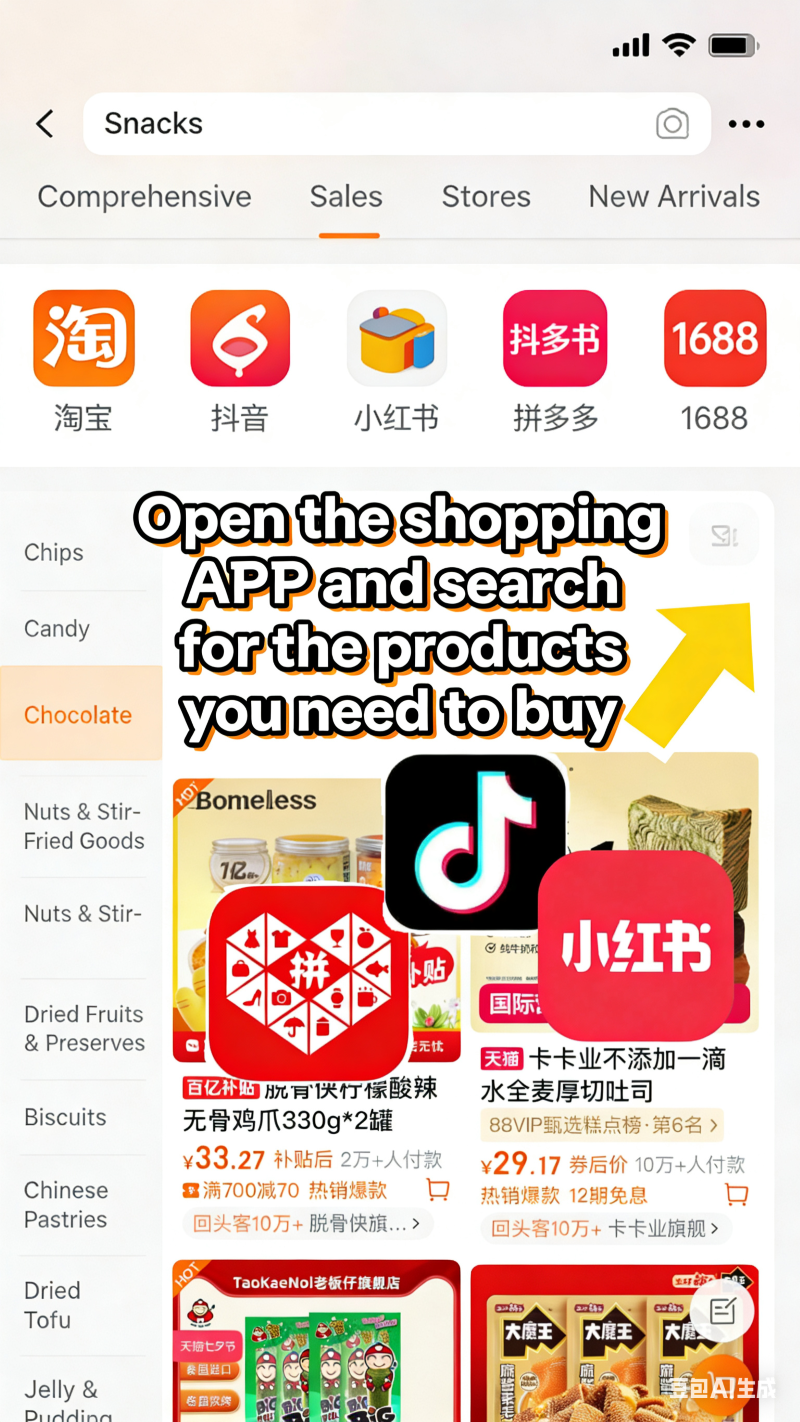
The first step
Open the APP where you need to purchase the goods
Step Two
Download and register/log in to the Taojiyun TW app
Open an iPhoneClick to jump to the APP Store downloadSearch for the Taojiyun Taiwan version APP
Android phoneClick here to download and jumpDownload the Taojiyun Taiwan version APP
2. ClickRegister/Log in】
Get an exclusive address for the Chinese mainland

Step Three
Copy the address to the address bar of the shopping APP
Wait for the goods to arrive at the consolidation warehouse and check the box to apply for consolidation

Step Four
Fill in the delivery address in Taiwan
Pay the freight
Waiting for the delivery to your door
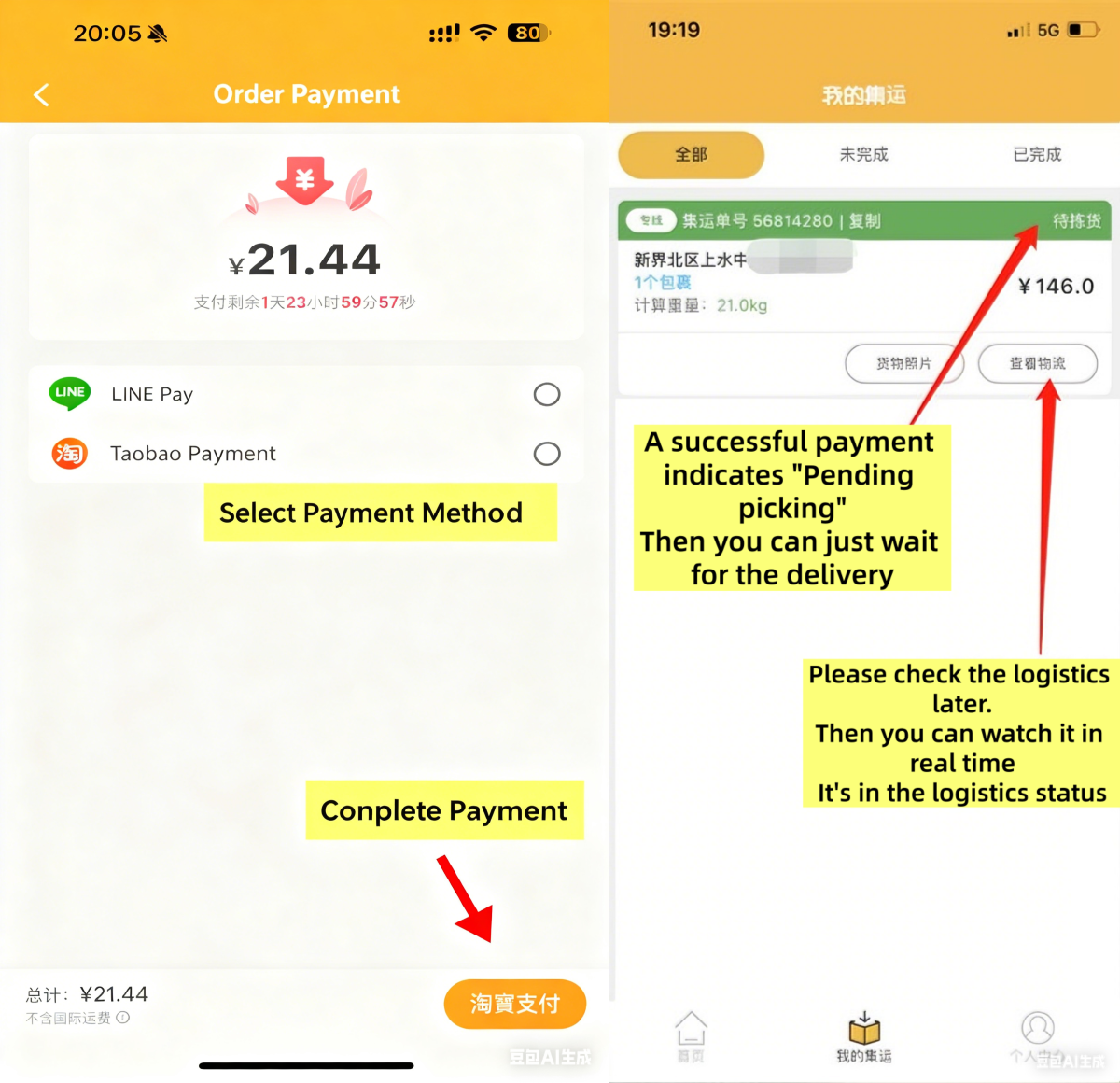
Step Five
Waiting for the goods to be delivered to your door
Contact information for Taojiyun - Taiwan Special Line
WeChat:
Taojiyun Taiwan Consolidation: 18814360092
Line:@269trfre
Click to jump to Taiwan's online customer service【Online customer service】

Beijing Time 2024/10/10 16:09:40
Download APP

Download Taojiyun APP
More convenient query
Customer Service

Scan the QR code to add WeChat
13049844111

Scan the QR code to add WhatsApp
54271072
Line

Scan the QR code to add Line
@269trfre